Gjesdahl Law has been helping individuals with divorce in the greater Fargo area for decades. Our divorce attorneys can answer any questions that may come up during the legal process and will give you the best advice for you and your family. For divorce legal services, get in touch today.
Before completing a form, please check out our Initial Contact Questions to see if your question has been answered.
North Dakota is a “no-fault” state. Unlike in days gone by, to obtain a divorce in North Dakota, you don’t have to convince a judge that your spouse is an adulterer, an alcoholic, has abused you, or has abandoned the marriage. You just need to share “irreconcilable differences,” general reasons why you can’t stand to remain married any longer.
Consequently, a North Dakota divorce is not a legal fight about whether you or your spouse will be granted a divorce. No. It’s about everything else.
Instead, it’s about:
Your Children: Who will they live with? How much time will they spend with you? With your spouse? Who will make decisions about their medical care, their schooling, their activities? How does child support work? Who sets the monthly amount? How is that amount identified? How is it collected? Who pays for children’s medical insurance? Uninsured medical expenses? Daycare? Private school? Can a parent relocate, out of state, with the children?
Your Assets and Debts: Who will stay in the home, who will leave? Or will it need to be sold? How will your accounts—checking, saving, investment, retirement—be divided? Do you get to keep your premarital assets? What you inherited? Gifts? If you get half of the estate, how is “half” figured out? How much is half? What assets, what debts, make up your half? Does she get to keep all of her own retirement assets? If not, can they be divided without causing early withdrawal penalties? If you get the house, will you have to refinance the mortgage into your own name?
Closely Held Businesses: How are farm or business assets divided? How are businesses valued? How can a spouse be bought out when the business has cash flow limitations?
Your Standard of Living: What will your monthly budget look like after the divorce? Can you afford it and, if so, how? Is there still such a thing as “alimony”? If so, how is the amount figured out? How long does it last?
Taxes: Who gets to claim the kids as dependent exemptions? Who claims “Head of Household” status? In the year of divorce, do you file as “married” or “single”? Who will receive the mortgage interest deduction this year? Do we need to be concerned about capital gains?
Names: Can you use your maiden name again after the divorce? Should you? Can this be handled as part of the divorce?
Domestic Violence: If your spouse is physically, verbally, and emotionally abusive, what protection can a court give you? How can it protect your children?
Your divorce may involve tax issues, insurance issues, financial planning, mental health concerns, child support collection, and more. Accordingly, you may encounter accountants, appraisers, realtors, mental health professionals, and governmental agencies. We are familiar with the issues that may be foreign to you and have relationships with the types of professionals and agencies you will encounter.
Our attorneys help people answer any questions that may come up during the legal process and will give you the best, catered advice for you and your family. If you need help with divorce issues, give us a call or send us an email.
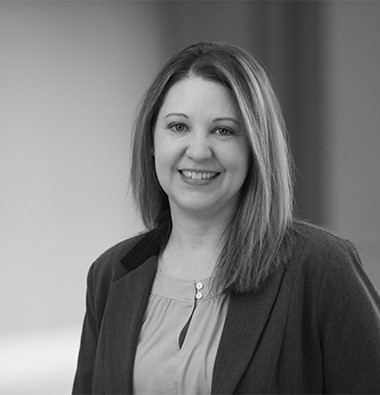
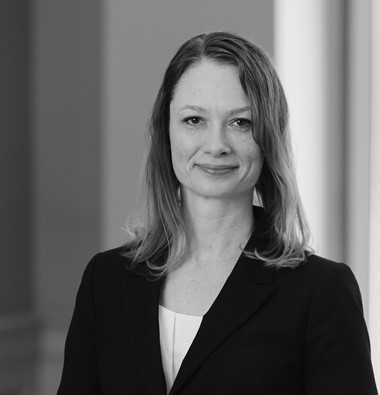
Our legal team has decades of combined experience in all areas of family divorce. From litigation to collaborative divorce, our attorneys advocate for seamless transitions into new family dynamics with experienced legal counsel and assertive representation when you need it most. Get to know the faces of your divorce team:
North Dakota’s statute on dividing property in a divorce case isn’t very helpful. All it says is that "the court shall make such equitable distribution of the real and personal property of the parties as may seem just and proper..." N.D.C.C. Section 14-05-24.
The North Dakota Supreme Court has stated that an equitable distribution is that which is "just and proper." In other words, the court can award property in any way it sees fit so long as the distribution is fair to all concerned. It has also instructed trial courts to consider these “factors”:
In long-term marriages, the courts generally look to a 50/50 division of assets and debts. However, the North Dakota Supreme Court has often said that a property division need not be equal to be equitable. If the court finds that a 50/50 split is not equitable, any substantial disparities from the court must be explained. Our Supreme Court regularly affirms disparate distributions of marital estates and has carved out a number of commonly recognized reasons supporting such distributions, including:
If you believe your marriage is in trouble, there are several ways you can and should protect yourself:
In order to get the most out of the initial consultation with your attorney and save both time and expense, make sure you have copies of the following documents:
In addition to gathering the above documentation, we encourage our clients to fill out and return our divorce intake sheet.
A divorce in North Dakota may not be granted unless the plaintiff (person filing for the divorce) has been a resident of North Dakota for six months. Oddly, a North Dakota divorce can be started on a person’s first day of residency. It just can’t be finalized until he or she has lived in the state for six months.
As long as the plaintiff satisfies the six-month residency requirement, the court has the authority to grant the divorce even if the defendant (non-filing spouse) lives in another state or doesn’t cooperate.
In North Dakota, a divorce may be granted for any of the following reasons:
The first six of these reasons represent the old-fashioned “fault” grounds for divorce. Although, today, parties don’t usually base their divorce on those old-time reasons, they could. North Dakota chose to add the no-fault reason of “irreconcilable differences” to its statute instead of replacing the old fault grounds.
“Irreconcilable differences” means little more than “I’m not happy in this marriage, and I want out.” Before this was an acceptable legal reason to divorce, parties could be trapped in unhappy marriages.
Even though North Dakota is a “no fault” divorce state—meaning that a divorce may be granted upon a finding of “irreconcilable differences,” North Dakota courts may take marital misconduct into account when dividing asset and debts or considering a spousal support award.
There are two main differences between a legal separation and a divorce. The first is that a divorce ends a marriage and a legal separation does not. The second is that assets and debts are completely and finally allocated in a divorce, but not in a separation.
Otherwise, the two actions bear striking similarities and address the same list of issues. Both actions determine custody, visitation and support of children. Both actions allocate possession and control of assets, with divorces proceeding further, to allocate full ownership rights. Both actions allocate liability for debts, with the allocation again being more complete in a divorce action. Both actions address the need for spousal support. Both address tax and insurance issues and more.
Most people in failed marriages prefer the clean and total break a divorce provides. People who retain a realistic hope for reconciliation or who oppose divorce on moral or spiritual grounds may prefer a legal separation.
North Dakota’s statute on dividing property in a divorce case isn’t very helpful. All it says is that "the court shall make such equitable distribution of the real and personal property of the parties as may seem just and proper..." N.D.C.C. Section 14-05-24.
The North Dakota Supreme Court has stated that an equitable distribution is that which is "just and proper." In other words, the court can award property in any way it sees fit so long as the distribution is fair to all concerned. It has also instructed trial courts to consider these “factors”:
In long term marriages, the courts generally look to a 50/50 division of assets and debts. However, the North Dakota Supreme Court has often said that a property division need not be equal to be equitable. If the court finds that a 50/50 split is not equitable, any substantial disparities from the court must be explained. Our Supreme Court regularly affirms disparate distributions of marital estates, and has carved out a number of commonly recognized reasons supporting such distributions, including:
There are two kinds of spousal support, permanent and temporary. Permanent support is most usually reserved for long-term marriages, and older spouses who have little, if any, earning capacity. They often involve marriages where one spouse is a high earner and the other is not. Temporary support is also known as “rehabilitative” support. It is intended to help a party bridge the gap between being in an economic partnership and being single and self-sustaining.
When deciding whether to award spousal support, North Dakota Court’s consider many circumstances, including:
The distribution of the parties’ marital debts and assets connects with the spousal support issue. People who receive handsome estates in their divorce are less likely to receive spousal support
In divorces finalized after January 1, 2019, the person paying spousal support may no longer deduct the payments from their income tax. Likewise, spousal support recipients no longer pay taxes on those payments. In other words, spousal support payments are now paid with after-tax dollars.


5-Star Review
"I don't typically write reviews, but when your best friend has been represented by the BEST in the business, you let others know. Mike Gjesdahl is that attorney.
Approximately one year ago, my friend needed to find someone to represent her as she went through a challenging divorce. We were looking for someone who is whip smart when it comes to family law and divorce proceedings. Other attorneys pointed us toward Gjesdahl Law so we knew she would get a top-knotch lawyer. What we didn’t expect were all the “extras” that made her experience exceptional.
Mike Gjesdahl goes above and beyond for his clients. He is strong in all situations and his clients draw from that strength. He is compassionate toward his clients and their families; he understands what they are going through. Mike has the wisdom and experience people need when they are going through a life-changing circumstance like divorce.
To sum it up, Mike was the blessing my friend needed at a crucial time in her life.
Mike Gjesdahl and his team will always have my highest recommendation."
- Andrea Larson